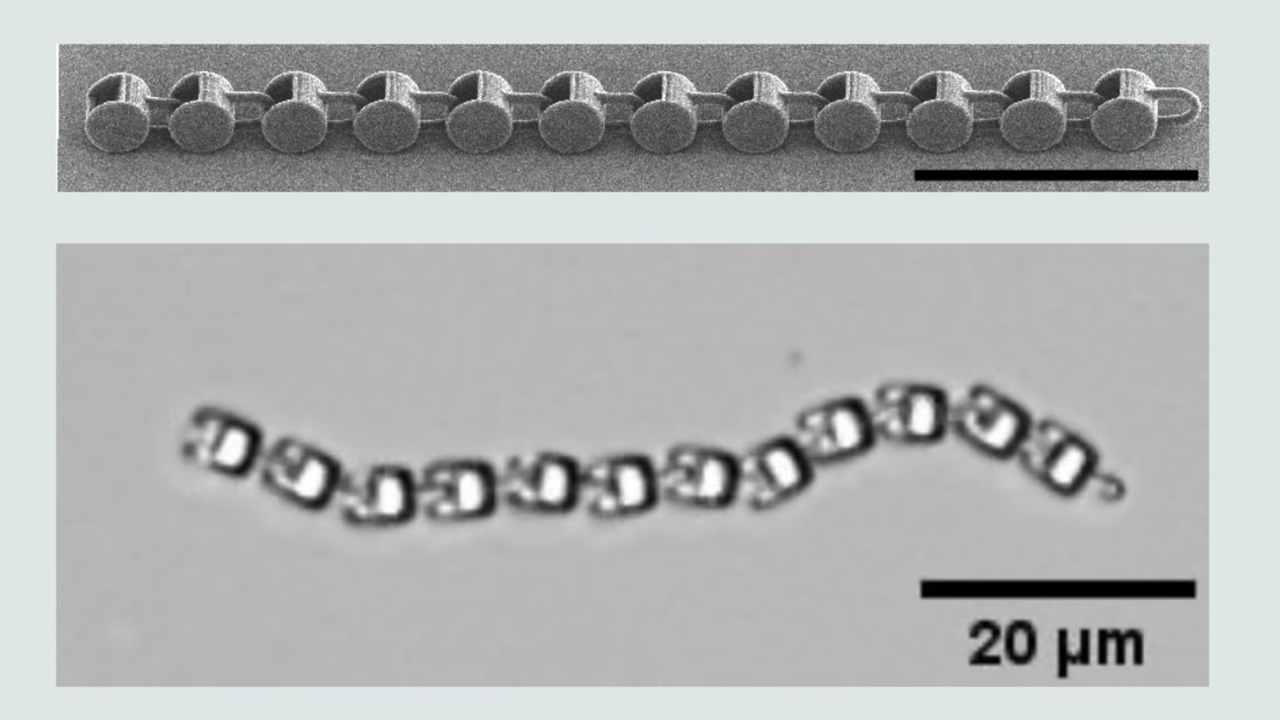
Researchers 3D print robot the size of a single-cell organism — devices move and navigate even without a ‘brain,’ uses their shape and the environment to get going
⚡ Quick Hits
- 🔬 Microscopic Scale: The robot is impressively miniature, matching the size of a single-cell organism.
- 🧠 Brainless Navigation: It operates completely autonomously without a centralized computer, battery, or 'brain'.
- 🌊 Environmentally Driven: Movement and direction are dictated entirely by how its 3D-printed shape naturally reacts to its surrounding environment.
Greetings, tech enthusiasts! The Tech Monk here, bringing you a fascinating glimpse into the bleeding edge of robotics and micro-manufacturing. When we think of robots, we usually picture complex arrays of sensors, microprocessors, and heavy battery packs. However, researchers are flipping that script with a tiny new invention.
Scientists have successfully 3D-printed a microbot that is roughly the size of a single-cell organism. What makes this microscopic marvel truly groundbreaking isn't just its scale, but how it manages to function. This device operates completely without a "brain." There are no integrated circuits, logic boards, or onboard computers dictating its path.
Instead, the microbot relies purely on morphological computation. By leveraging its meticulously 3D-printed shape and the natural physical forces of its environment, it is able to propel itself and navigate autonomously. It organically uses the surrounding environment to "get going," essentially letting the physics of its design do all the heavy lifting. This represents a massive leap forward in micro-robotics, potentially paving the way for targeted medical treatments where tiny, harmless robots navigate our bloodstream to deliver medicine exactly where it's needed. Keep an eye on this space—sometimes the biggest technological revolutions come in the smallest packages!