Tech titans team up to form optical interconnect alliance to solve the AI buildout's big data bottleneck — Nvidia, AMD, Broadcom & more set sights on building PHY to break through the limitations of copper
⚡ Quick Hits
**
- Major industry rivals like Nvidia, AMD, and Broadcom are collaborating to create a unified optical standard.
- The new optical PHY aims to replace traditional copper wiring, which is currently limiting AI bandwidth.
- This initiative, highlighted around Hot Chips 2024, is critical for scaling next-generation data centers and supercomputers.
**
**
Greetings, fellow tech enthusiasts. The Tech Monk here, bringing you a massive development from the infrastructure side of high-performance computing. Emerging from the discussions around Hot Chips 2024, a groundbreaking collaboration has been unveiled that promises to fundamentally reshape the backbone of AI data centers.
The Great Copper Bottleneck
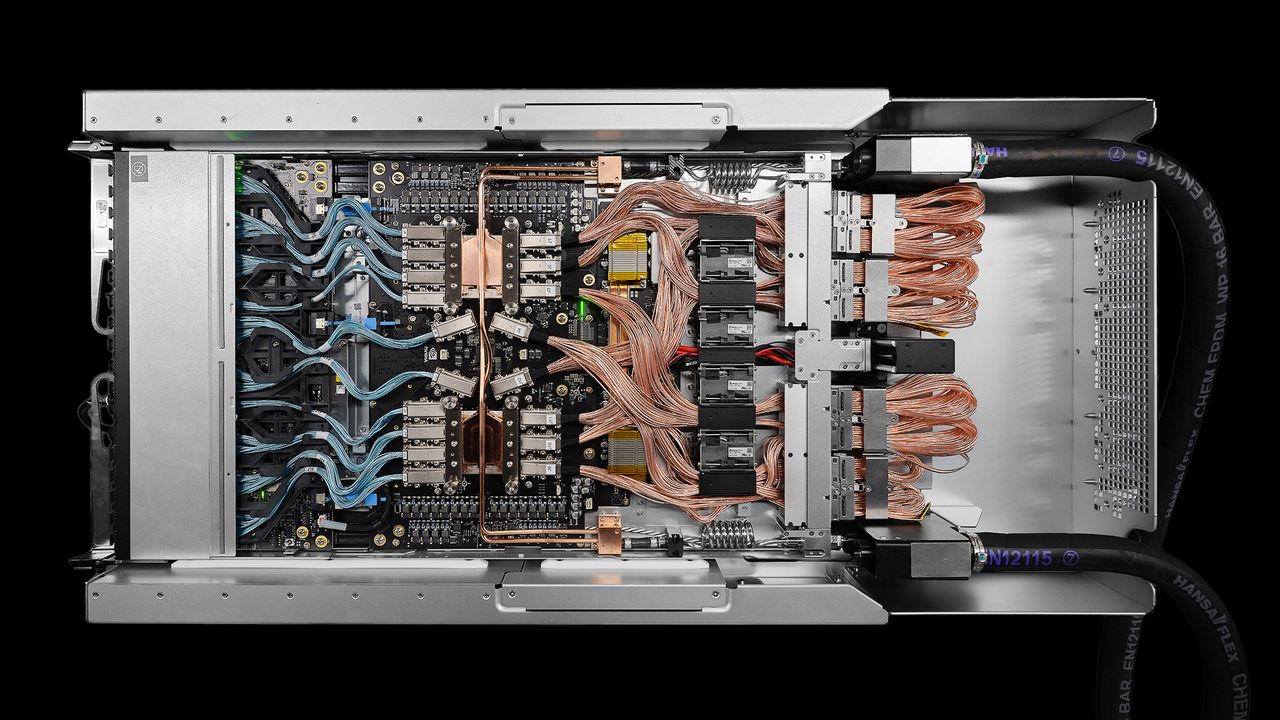
As artificial intelligence models grow at an exponential rate, the physical hardware supporting them is hitting a literal wall. Traditional copper wiring simply cannot move massive datasets fast enough or efficiently enough to keep up with the demands of modern AI buildouts. Copper interconnects suffer from severe limitations: they restrict bandwidth, generate excessive heat, and suffer from heavy signal degradation over longer distances.
Lighting the Way Forward
To break through these physical limitations, bitter industry rivals are putting down their swords to collaborate. Tech titans including Nvidia, AMD, Broadcom, and others are teaming up to develop a standardized optical PHY (Physical Layer). By transitioning from electrical signals over copper to photons over fiber optics directly at the chip level, this alliance aims to radically increase bandwidth, lower latency, and drastically reduce power consumption.
The Monk's Perspective
This isn't just an incremental hardware update; it is a foundational shift in server architecture. When companies of this magnitude collaborate on a unified standard, it guarantees industry-wide adoption. Moving data via light rather than electricity is the only viable path forward to sustain the AI revolution. Keep a close eye on this development, as the resulting technologies will serve as the nervous system for the next generation of global supercomputing.