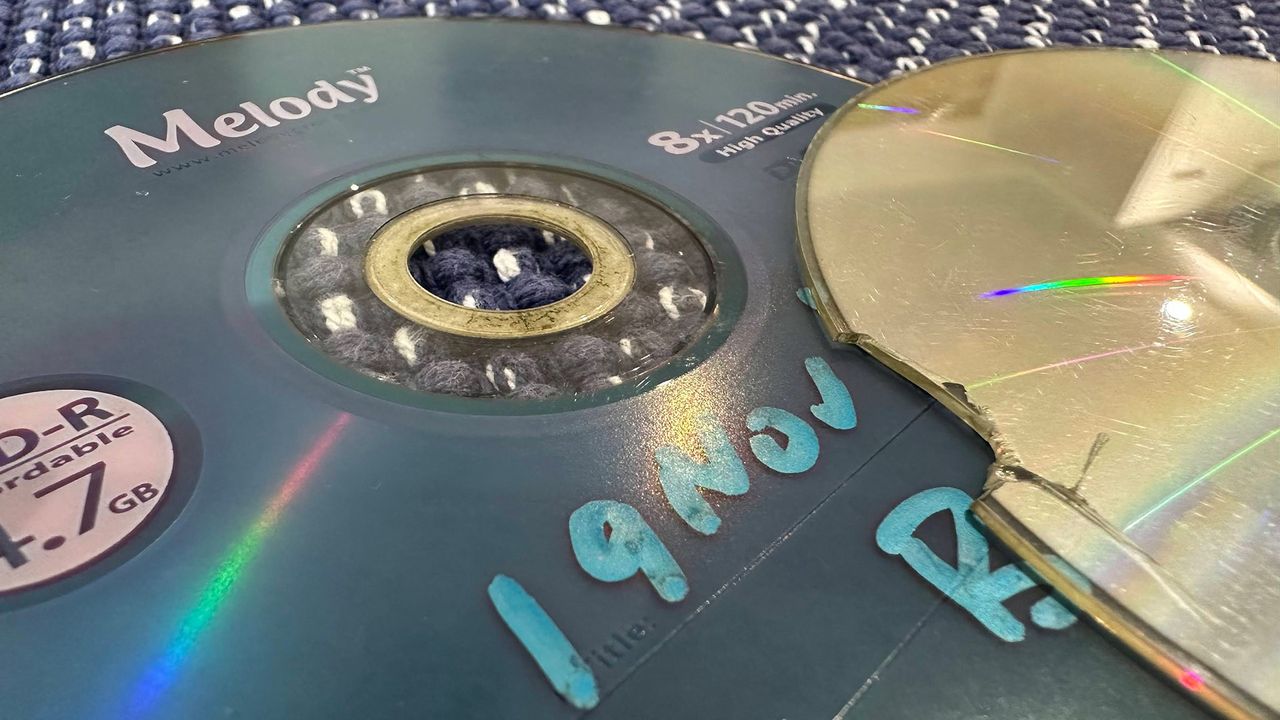
Catastrophic optical disc shattering blamed on cleaning chemicals and packing foam — another data preservation concern to add to bit rot and laser rot
⚡ Quick Hits
- Degrading packing foam and harsh cleaning chemicals are chemically weakening the polycarbonate layers of CDs and DVDs.
- When these compromised discs are spun at high speeds in modern drives, they are prone to catastrophic, explosive shattering.
- This severe structural failure compounds existing long-term physical media concerns like "bit rot" and "laser rot."
Greetings, fellow tech enthusiasts! The Tech Monk here with a crucial warning for the data hoarders, retro archivists, and physical media purists among us.
Veteran tech journalists—the kind who cut their teeth on the rubber-keyed Sinclair Spectrum 48K and the Atari 520 STe—have spent decades documenting the evolution and inevitable decay of our digital storage mediums. While the tech community has long been aware of silent killers like "bit rot" and "laser rot," a much more explosive data preservation concern has recently taken center stage: catastrophic optical disc shattering.
If you rely on physical media for your archives, listen closely. Reports are surfacing that older optical discs are literally blowing apart when spun up in disc drives. The culprits aren't just age; they are the very things we used to protect them. Harsh cleaning chemicals applied years ago, along with the degrading packing foam often found in spindle cases, are chemically reacting with the polycarbonate structure of the discs. Over time, this reaction severely compromises the disc's structural integrity.
When you place one of these weakened discs into a high-speed optical drive, the centrifugal force is simply too much, resulting in the disc shattering into countless pieces inside your hardware.
The Tech Monk's Advice: If you are actively curating a retro software collection or maintaining physical backups, it is time to audit your storage methods. Remove any old packing foam from your CD/DVD spindles immediately, avoid using unverified chemical solvents for cleaning, and seriously consider migrating your most precious legacy data to modern, solid-state mediums before it literally shatters into dust. Stay safe, and keep your data secure!